Digitizing Daily Whiteboard Meetings for Factory Operations
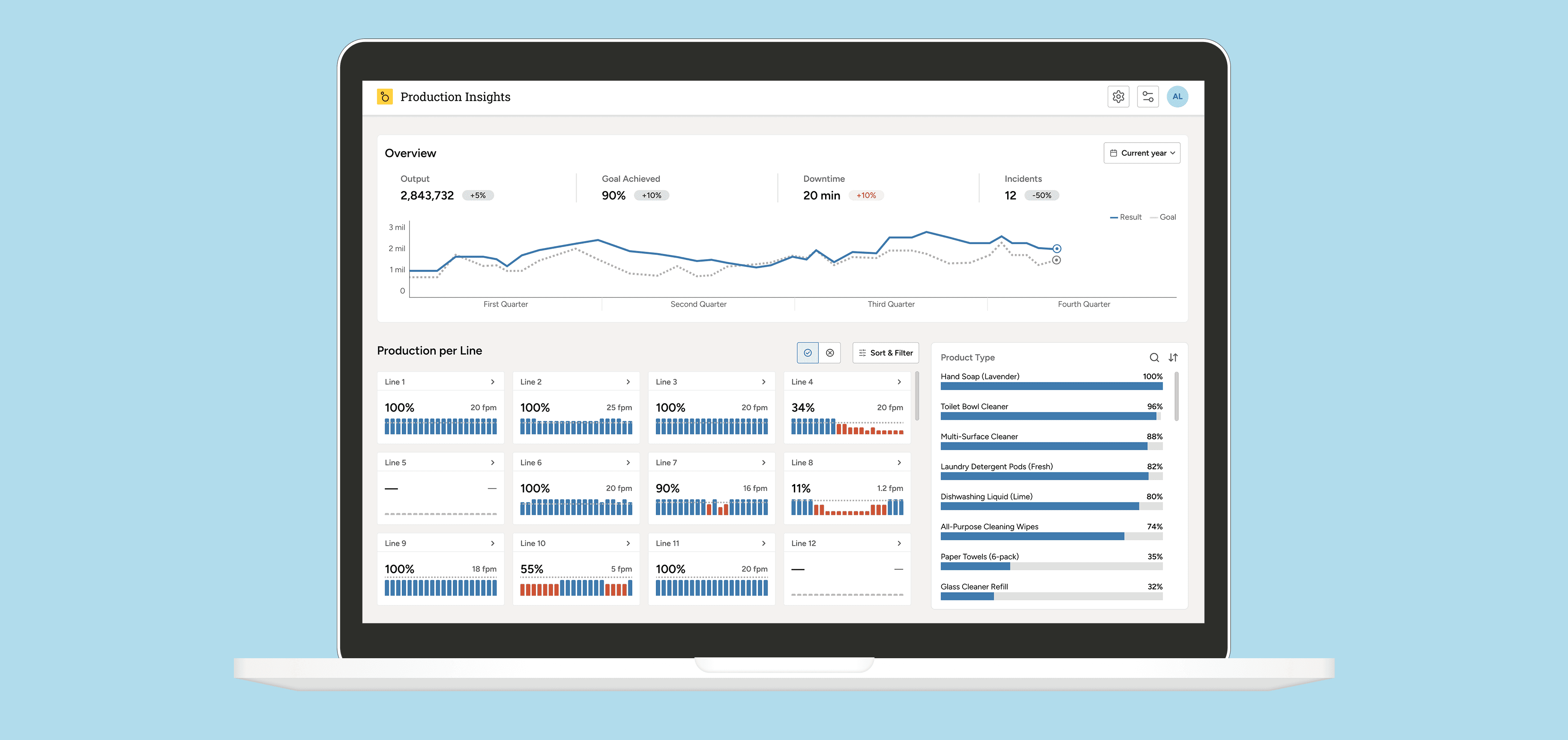
Web dashboard
Data visuals
Team
Design Manager
Designer (Me)
Business Strategist
My Role
Strategy
Conceptualizing
Designing
Tools
Figma
Duration
4 months
Project Overview
Designing a dashboard for Operation Managers to digitize their daily whiteboard meetings and increase factory production
I was a designer on a team that builds custom B2B tools for production manufacturers. The client is a home goods & nutrition company that wanted to track their factory data and digitize daily whiteboard meetings to improve output. I worked with designers and stakeholders to explore solutions that fit the natural rhythm of the factory floor.
Disclaimer: This case study has been anonymized to adhere to NDA guidelines, for details on my work reach out to me.
Background
Operation Managers hold daily whiteboard meetings to set production goals at their factory
My client is a manufacturer of home goods and consumables. Every morning before production begins at their factory, whiteboard meetings are held. Meetings are led by Operation and Shift Managers who make plans and set goals for how many units of product will be made that day. Information is written on a big whiteboard for everyone to align on.
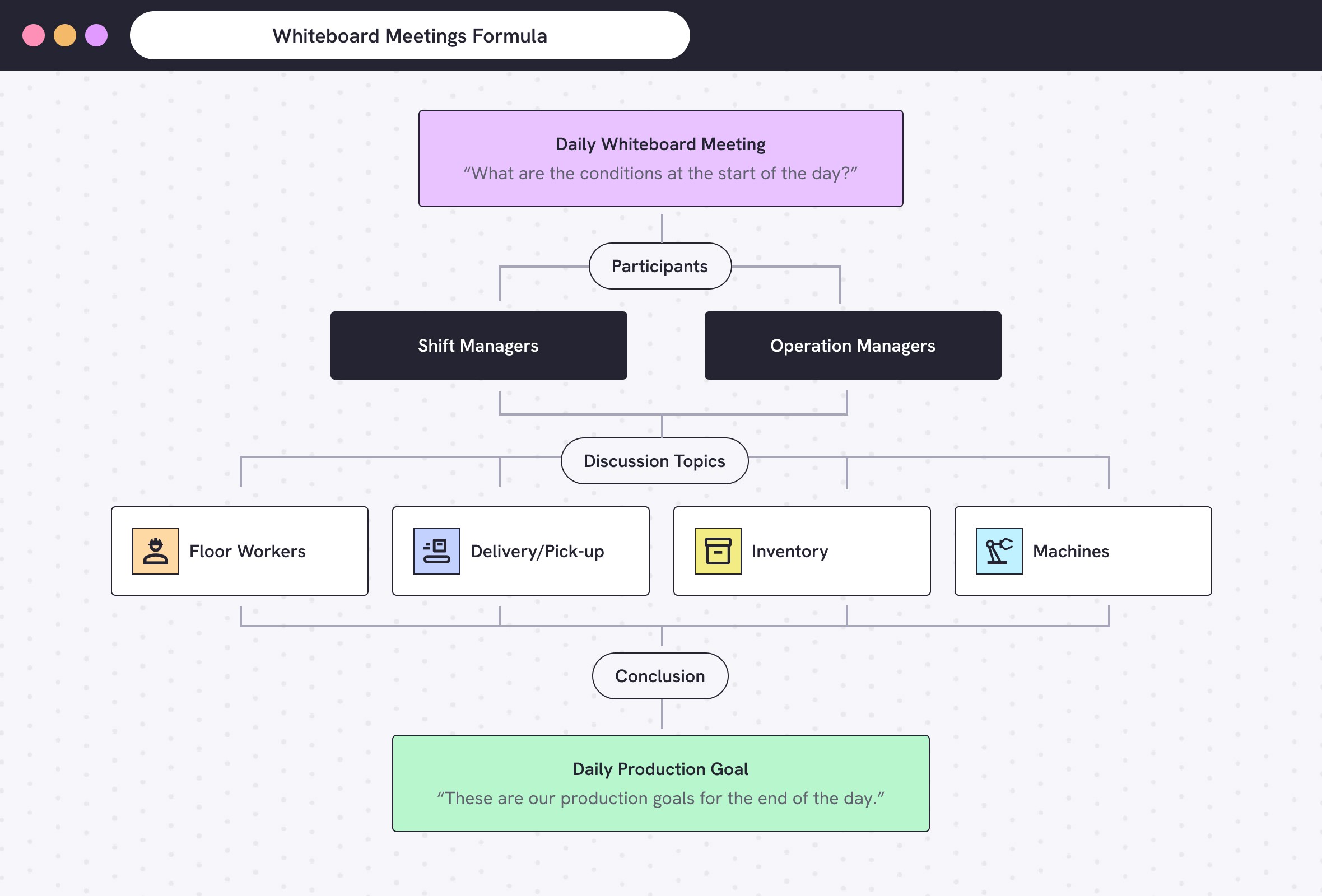
The whiteboard gets erased after each meeting, making long-term improvements and increasing output nearly impossible
Managers want to increase production output and sell more goods. But each plan to improve performance fails. Incidents on the factory floor cause setbacks, forcing teams to make up for lost units the following day. Whiteboard meetings are meant to help mitigate these issues. Yet, at the end of each meeting the whiteboard is erased and all data recorded is lost. With no system to monitor data over time, long-term improvements are impossible.
INSIDE THEIR DAILY ROUTINE
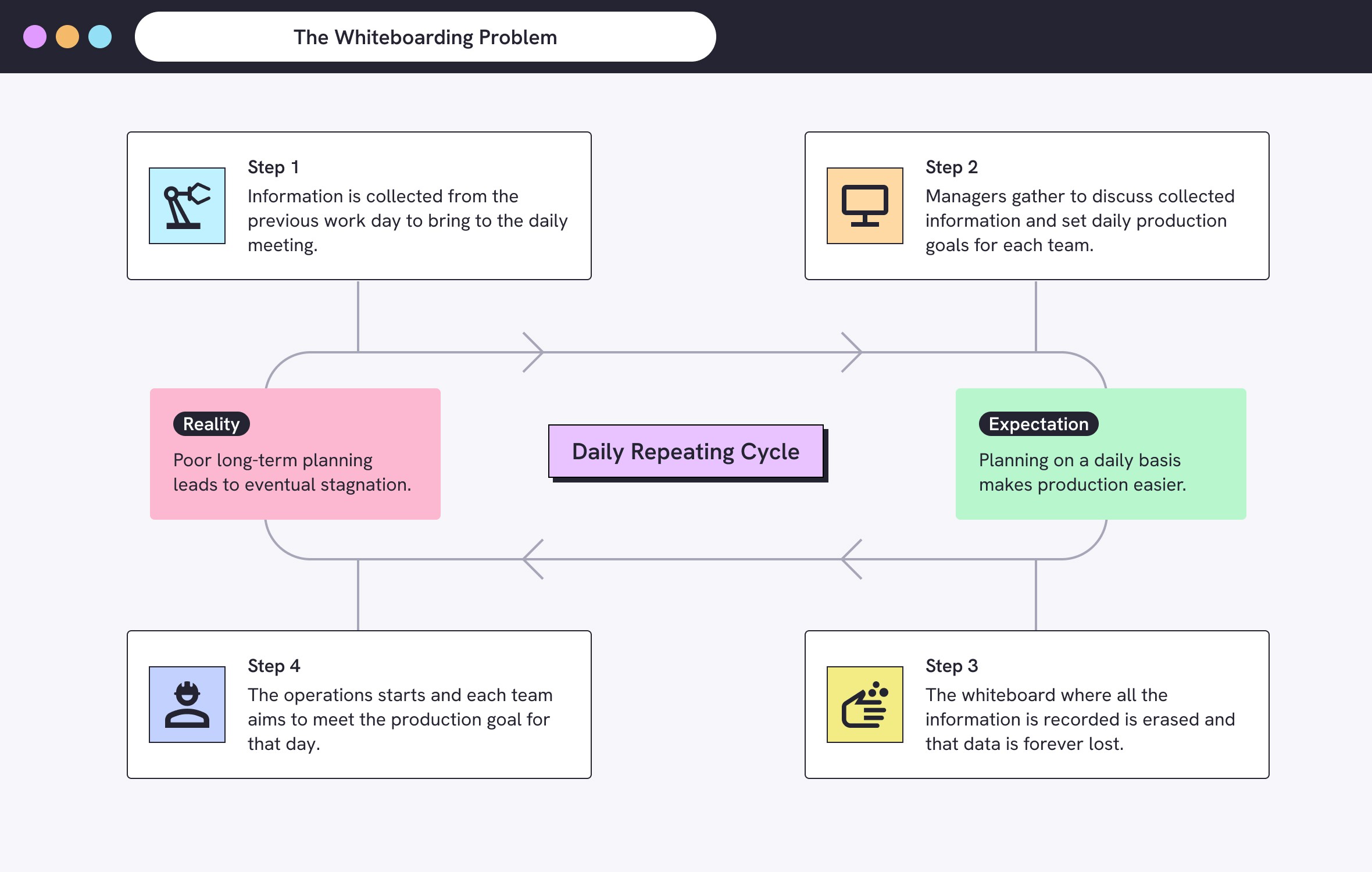
Understanding how daily operations revolves around the whiteboard meetings to digitize it
Everything at the factory revolves around the meetings. The daily agenda is 3 parts: Before meeting → During meeting → After meeting. First, managers collect performance data about the prior workday. That data is reviewed, daily goals are set, then teams get to work to hit their targets by EOD. My role was to figure out what parts of this process made sense to bring into a digital system.
Daily Factory Operations Revolve Around Meetings
Before meeting
Prep and Collection
Data is gathered from machines, inventory, floor staff, and the previous day’s performance to prepare for discussion.
During meetings
Planning and Alignment
Managers review metrics, align on priorities, and decide how to allocate people and resources for the day.
After meetings
Executing and Delivery
Teams break off and begin work, aiming to hit daily goals using the plans and assignments just set.
Operations Managers and Shift Managers meet daily to align on factory goals
Two main user groups take part in whiteboard meetings: Operations Managers and Shift Managers. Operations Managers oversee daily activities, set goals, and manage resources. Shift Managers run the factory floor and lead frontline workers at each station. Staying aligned on performance is critical to keeping production on track.
Operation Managers
Leads planning and ensures all lines are using resources efficiently to meet daily output goals.
Shift Managers
Supervises floor operations and makes real-time decisions to keep teams focused and on track.
VISUALIZING PRODUCTION DATA
Helping managers uncover meaningful insights within unstructured factory data
This company tracks everything from assembly lines, product units, floor workers, pick-ups and more. The clients weren’t sure what kind of solution they needed, they just knew they wanted to track factory data. It was up to my team and I to decide what insights to capture from their meetings and how to turn that into something useful on a screen.
Brainstorming a range of solutions for daily planning or on-floor support
I was originally set to design a dashboard for monitoring assembly line data. Since the client wasn’t sure what they needed yet, I started brainstorming a range of tools instead. Some for use during whiteboard meetings, others for day-to-day support on the factory floor. My team agreed it was best to show a full scope of possibilities to help the client find what would be most useful.
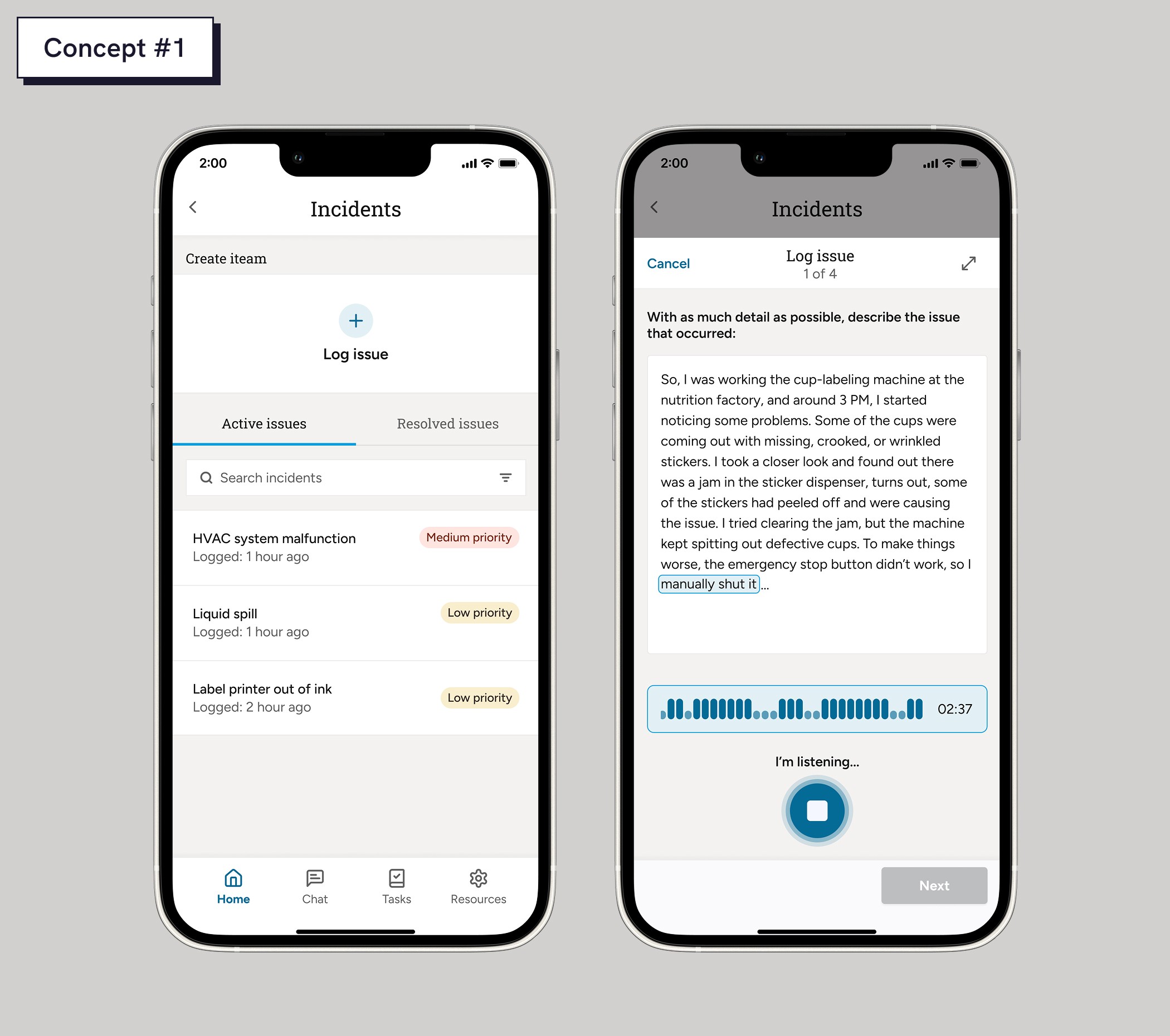
Incident Reporting
A mobile app for Floor Workers to report factory incidents. Workers can use voice-to-text to create memos, then AI analyzes the incident to suggest a resolution. Managers can review all reported incidents and their outcomes.
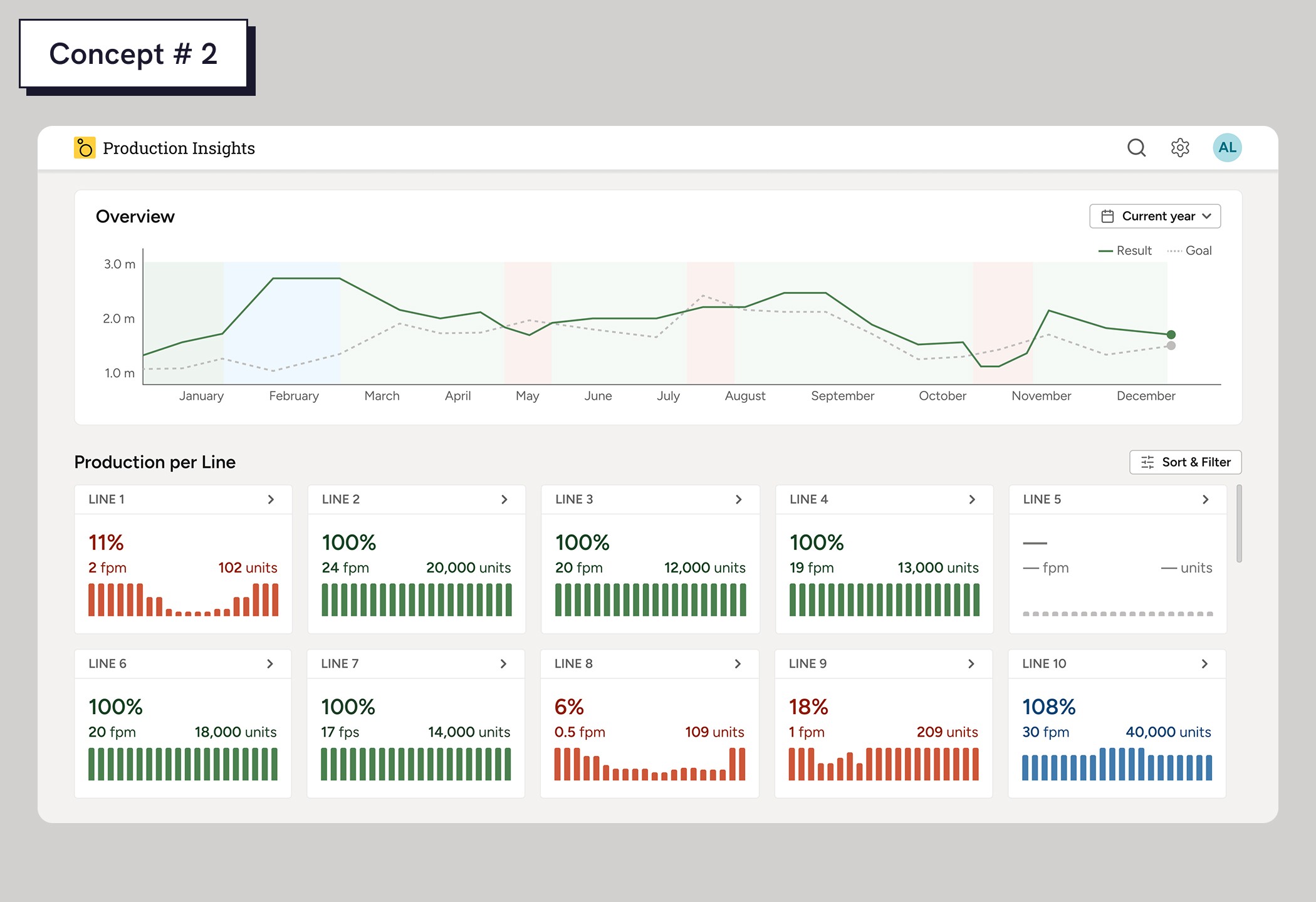
Overall Production Tracking
A dashboard for Managers to monitor overall factory output and performance by line. It helps identify which lines are performing as expected, underperforming, or exceeding benchmarks over time.
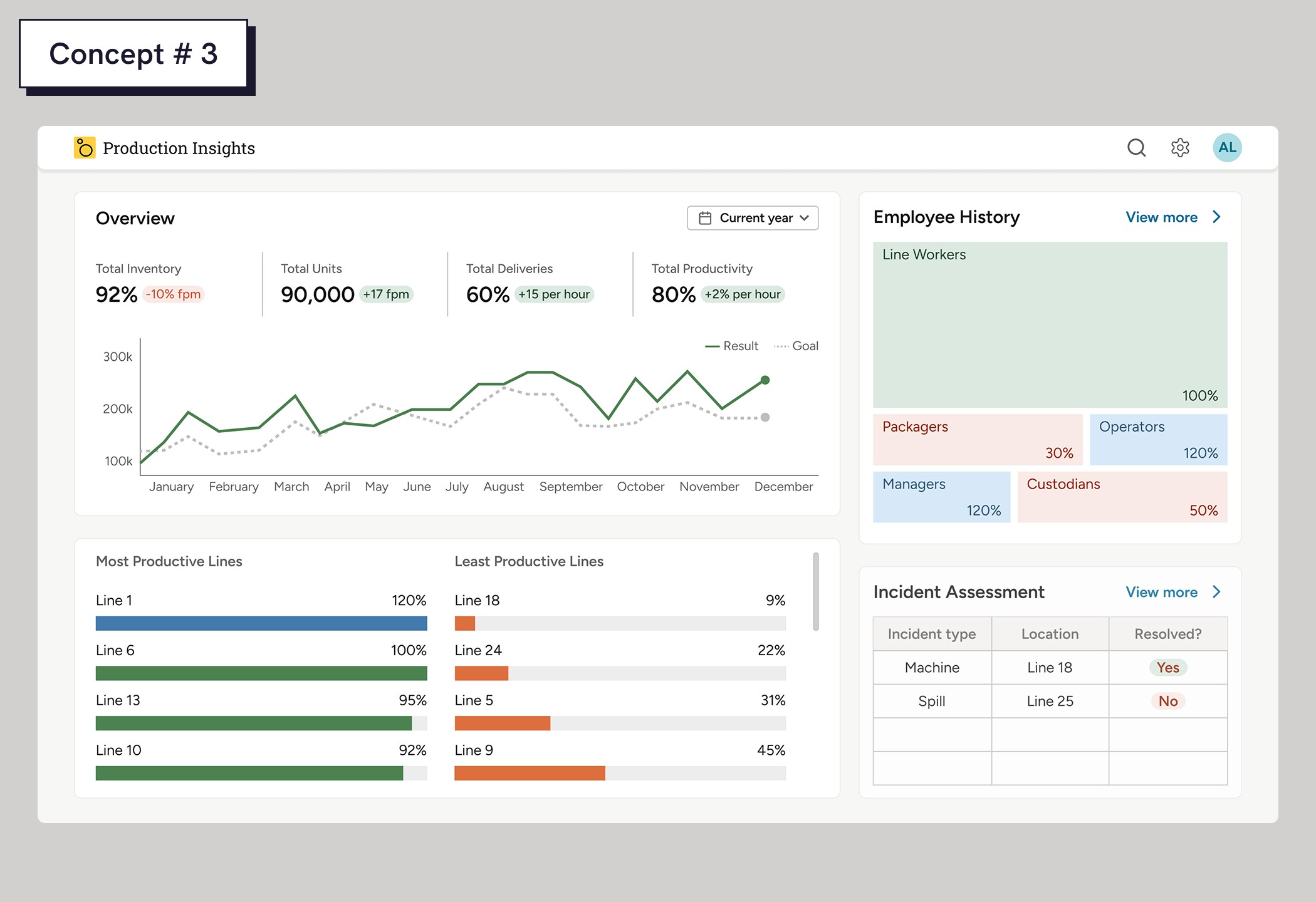
360° Factory Operations
A comprehensive dashboard that gives Managers visibility into every aspect of factory operations including total output, line performance, employee activity, and incident history.
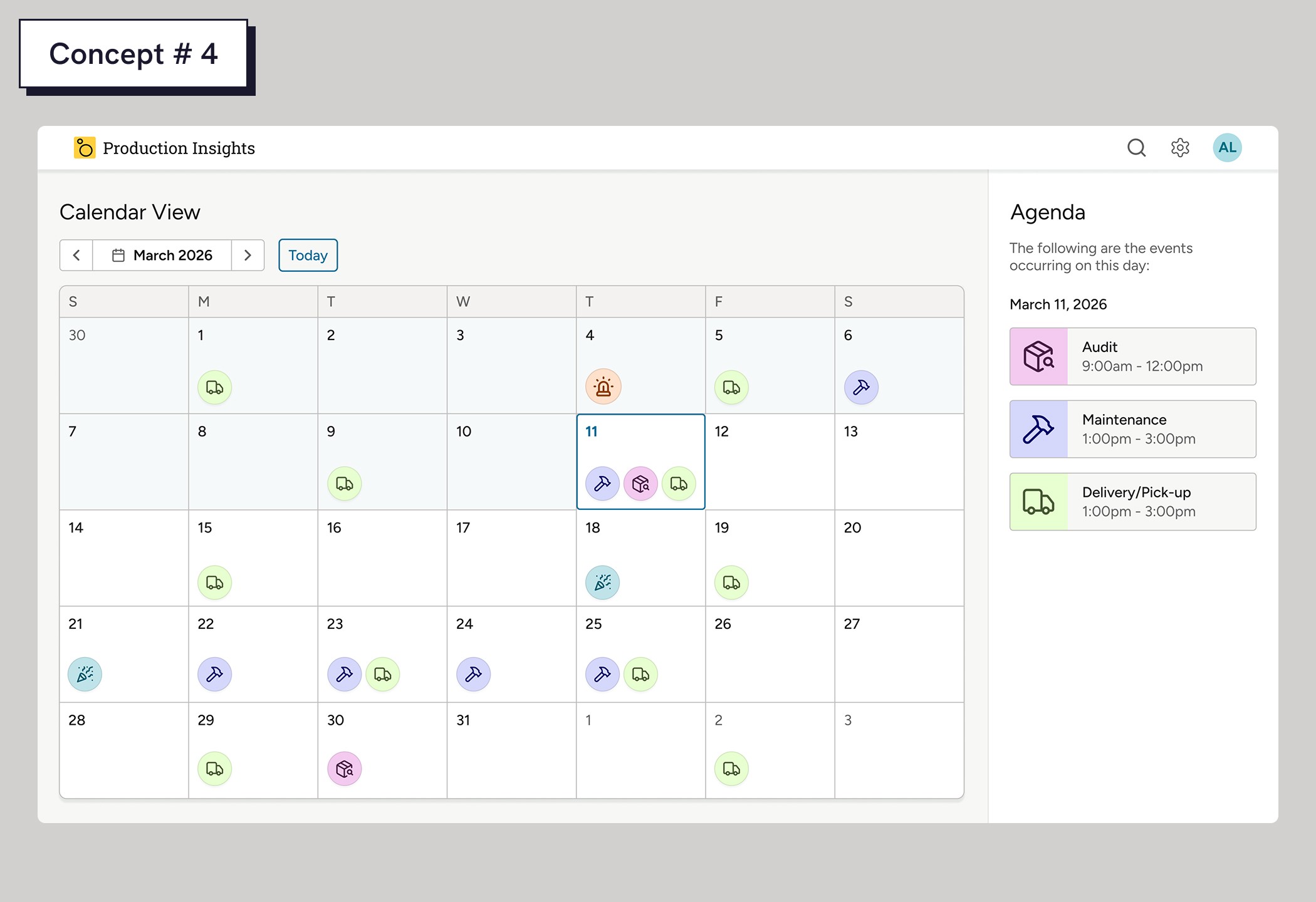
Schedule Tracking Calendar
A calendar view that complements the dashboard, showing the full scope of daily and upcoming events like pickups, deliveries, audits, maintenance, and more, to help Managers stay on top of schedules.
Prioritizing the dashboard design for both immediate and long-term performance tracking
Clients saw the dashboard as the key tool to monitor daily performance and track progress over weeks, months, and years. It would help them quickly identify issues during whiteboard meetings and evaluate whether their strategies were effective over time.
HIGHLIGHTING THE POSITIVE
Consolidating factory metrics to focus on assembly line performance and product output
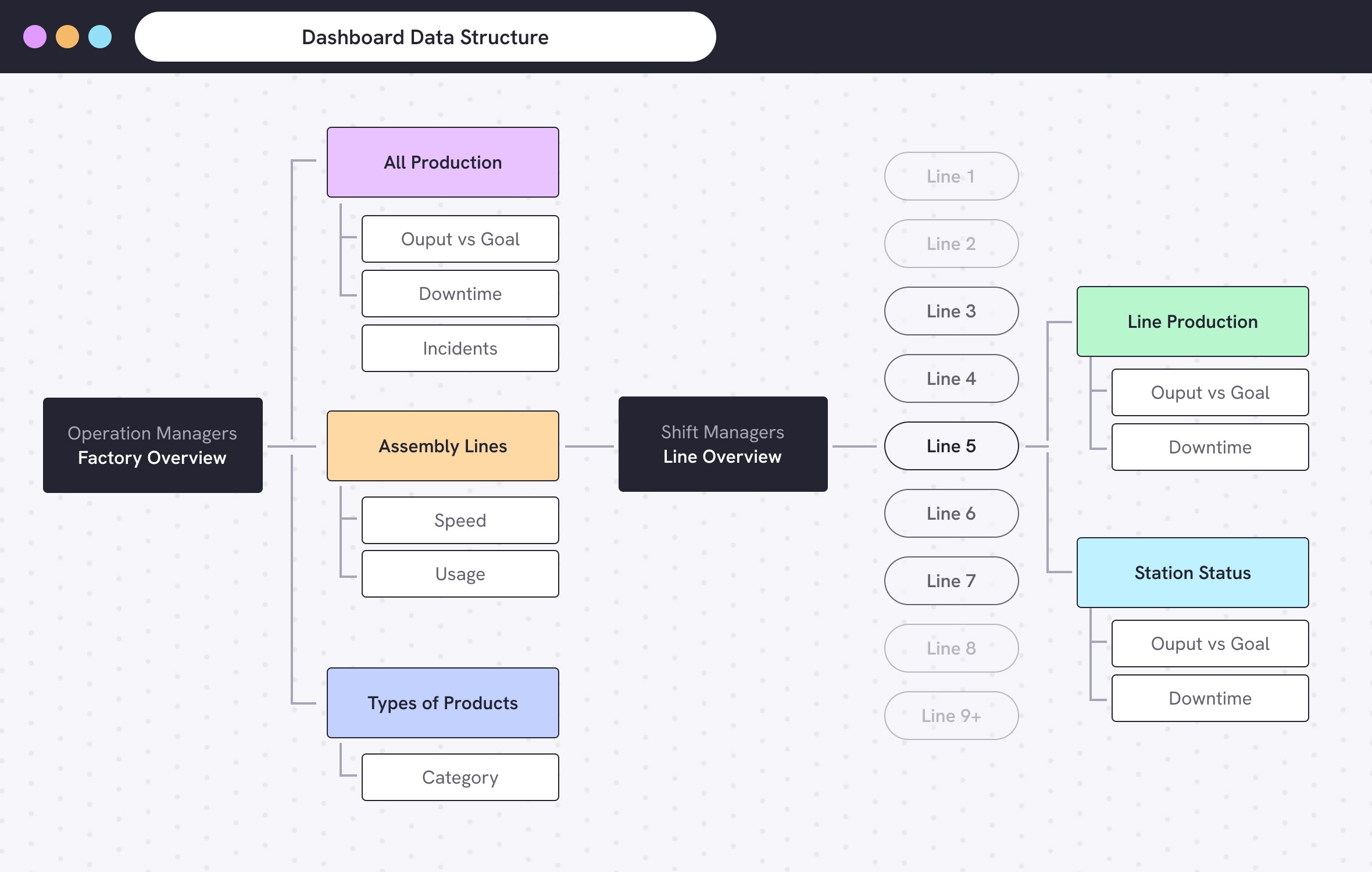
Initial designs included a broad set of metrics like: floor workers, inventory, pickups, assembly lines and more. Feedback informed me I could narrow the focus to just product output and assembly line activity. Highlighting which lines and stations are active, inactive, or under-performing can help each user address issues in their production. The designs needed a factory level view for Operation Managers and assembly line specific view for Shift Managers.
Highlighting strong performance to reflect how the company approaches data through a positive lens
The company prefers to view data through a positive lens. Shift Managers felt my designs overemphasized downtime and worried Operations Managers would focus too much on setbacks, missing the broader picture of strong production. I adjusted the visuals by refining color choices and adding toggles to better highlight positive performance while minimizing distractions from minor issues.
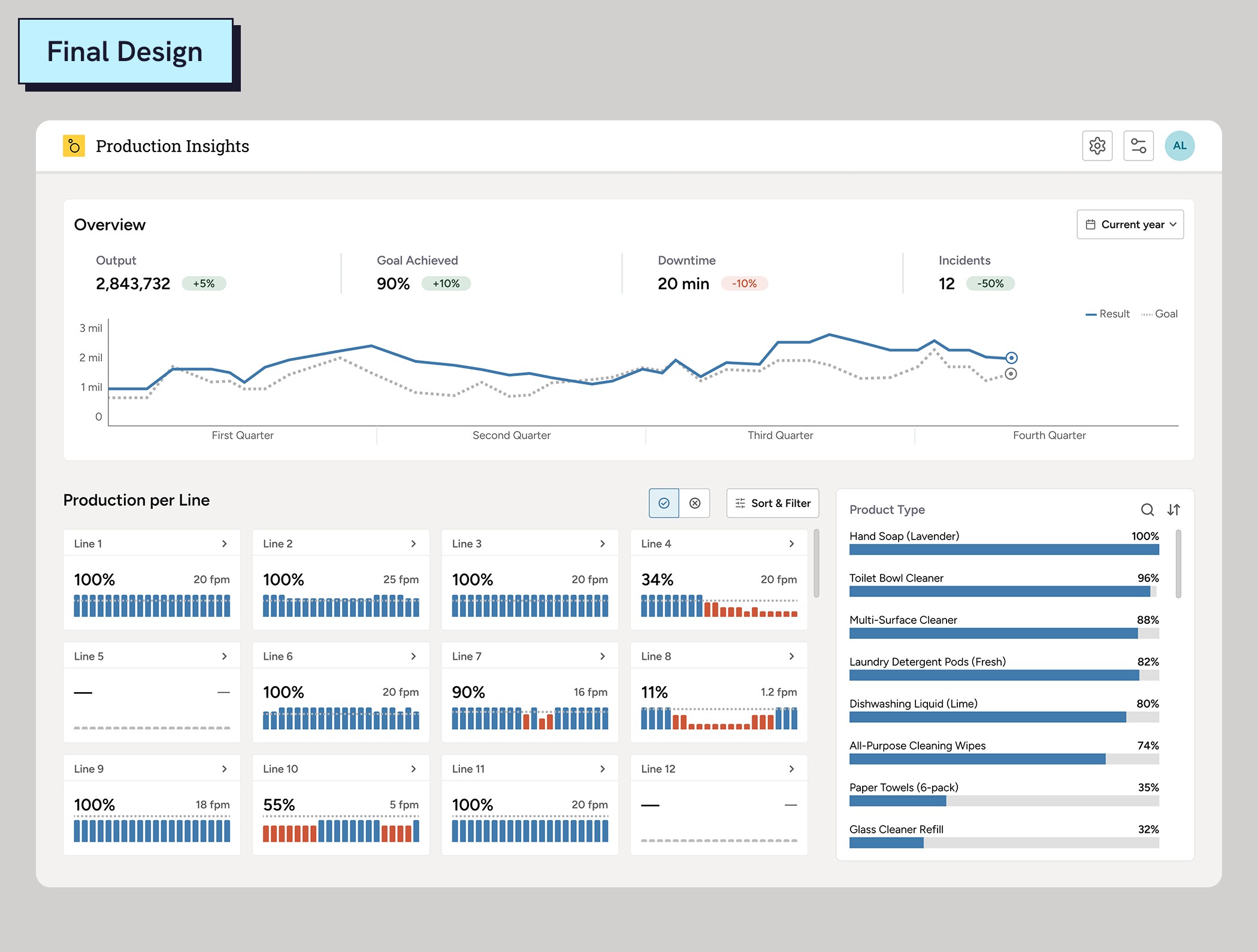
Operation Manager View
At a high level, Operations Managers can monitor the factory’s total output, individual product performance, and the efficiency of each assembly line, enabling them to assess performance and allocate resources with precision.
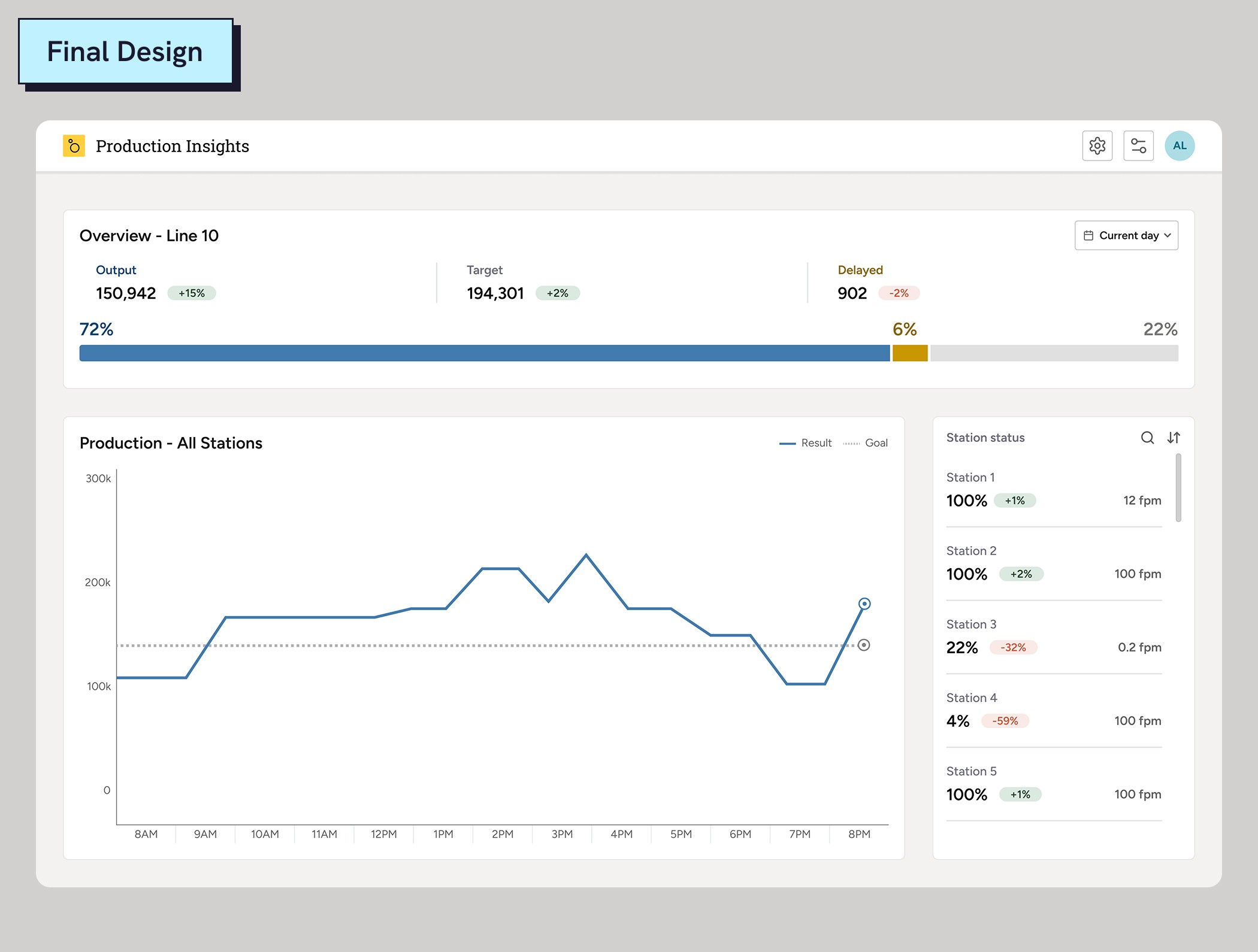
Shift Manager View
At a more granular level, Shift Managers can track the performance of the specific assembly lines under their supervision. This view helps identify strengths and pinpoint areas for improvement.
IMPACT
Outcomes
I checked in with the developers one last time to make sure my designs met all technical constraints. Once finalized, we shared the designs with the clients, who were excited by the solution and the sense of control they’d gain from finally having visibility into their production data.
Stakeholder Praise
The goal was to earn client approval to move into development, and our final designs successfully secured that commitment.
Project Greenlighting
As a design contractor, my stakeholder recognized my ability to collaborate and shape clear, strategic solutions when the client’s vision was still taking form.
Reflection
Key takeaways
This project taught me how important it is to think strategically as a designer. Clients don’t just need something that looks good, they need solutions they can’t envision themselves. Early on, I focused on showing a range of ideas to help them see what was possible. As the project progressed, ideas narrowed, and I guided them toward a solution that fit naturally into their workflow. Strategy isn’t just part of the process, it’s also the value I brought.